

Portland Off-Track Garage Door Warning Signs
Spot off-track garage door warning signs in Portland homes, understand what not to touch, and choose a safer D&L repair next step.
Dispatch reviews location, access, timing, and service details before appointment information is confirmed.
Quick decision support
Read the direct answer first, compare the symptoms or planning notes, then use the service and local links when you need D&L to review the next step.
- 6 min with answer-first sections
- Regional context for Oregon, Washington readers
- Safety boundaries before repair or installation decisions
- Crawlable links to related D&L services and resources
(503) 704-2654
OR CCB# 194109
This guide is maintained by the D&L Garage Doors team to explain common symptoms, service planning, safety boundaries, and when to request technician support in the Oregon area.
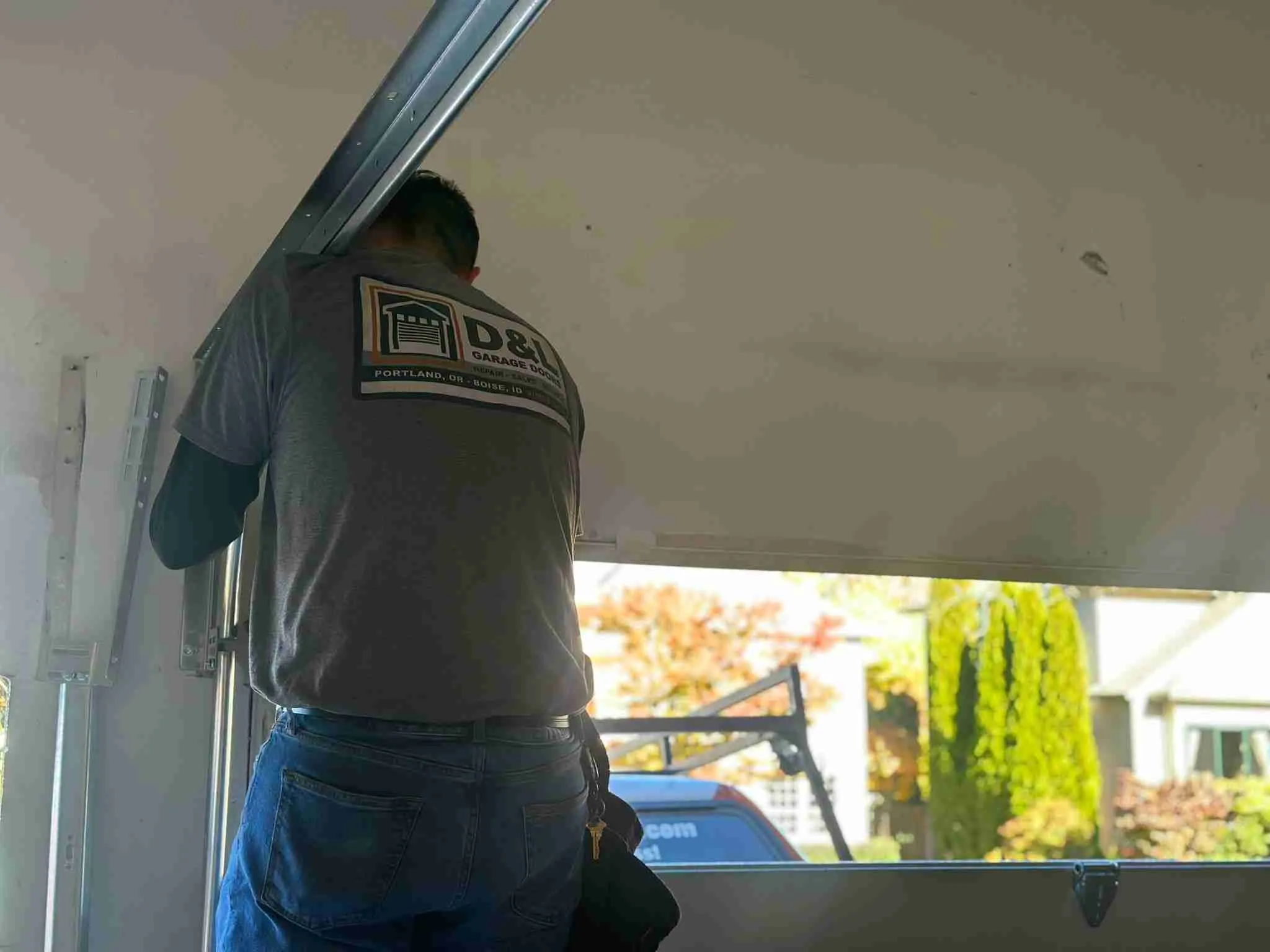
An off-track garage door is not a cosmetic problem. If rollers leave the track, the door may be uneven, unstable, and unsafe to force. Stop using the opener, keep people away from the door, and request service before trying to move the door back into place.
This guide is rewritten from owned Portland legacy content about off-track doors. It keeps warning-sign education and removes risky DIY repair framing.
Quick answer
Warning signs include a crooked door, rollers outside the track, grinding or scraping, a cable hanging loose, gaps between the door and track, or a door that jams after a few inches. The safest action is to stop cycling the door and get the system inspected.
What to check first
- Look at both vertical tracks from a safe distance.
- Check whether any roller appears outside the track.
- Watch whether the door rises evenly on both sides.
- Listen for scraping or metal-on-metal contact.
- Do not hammer, bend, pull, or pry the track while the door is under load.
Why off-track doors need a cautious approach
A garage door is heavy even when it looks balanced. Tracks guide the movement, but cables, rollers, hinges, brackets, and springs all share the load. When the door leaves the track, those parts may no longer be sharing that load correctly. Forcing the opener can twist the door, damage panels, or loosen hardware.
The cause is not always obvious. An impact, worn roller, bent track, loose cable, damaged hinge, or balance problem can all contribute. Repair should identify why the door left the track, not only push the roller back into place.
Portland conditions that can add to track trouble
Water, debris, and busy garages can make track issues easier to miss. Stored items leaning near the track, dirt buildup, and small bumps from bikes or tools can all affect the path of the door. Older rollers can also become noisy before they fail.
If the track problem appeared after a car, trash bin, ladder, or stored item touched the door, say that clearly. Impact damage changes the inspection. The technician may need to look at panel alignment, hardware attachment, track shape, and door balance together.
What repair should accomplish
A good repair should restore safe door movement and explain what caused the problem. That may involve rollers, hinges, tracks, cables, hardware, or related adjustments. It may also reveal that a damaged panel or worn part needs a separate conversation.
Homeowners should not be pressured into a guess. Before approved work begins, the findings, parts, labor, and site conditions should be discussed so the next step is clear.
When to stop using the door
Some garage door problems are inconvenient, and some are safety concerns. Stop using the door and request help when any of these signs are present:
- A roller is outside the track.
- The door is crooked, jammed, or partly open.
- A cable is loose or wrapped incorrectly.
- The opener pulls the door against resistance.
If a door feels unusually heavy, looks crooked, pulls to one side, or makes a new sharp sound, the safest next step is to stop forcing it. A garage door can look simple from the driveway, but springs, cables, rollers, tracks, and opener arms all work together under load. A small symptom can become a larger repair when the door is repeatedly cycled while something is already out of alignment.
What to tell D&L before scheduling
Clear details help dispatch understand the request and help the technician prepare for the visit. Before you call or use the estimator, write down:
- Whether the door was hit or bumped before the issue appeared.
- Which side looks off-track and whether the door is open or closed.
- Photos of both tracks and the full door from a safe distance.
- Any scraping, grinding, popping, or sudden stopping during operation.
Photos can also help when they show the full door, the opener, the inside tracks, and any damaged part from a safe distance. Do not loosen springs, remove bottom fixtures, pull cables by hand, or put tools into the track while the door is under tension.
Related D&L resources
- Portland garage door service page - local contact and service context for Portland-area requests
- garage door repair service details - repair symptoms, safety boundaries, and next-step guidance
- garage door spring replacement guidance - spring and balance issues that should not be handled as DIY repair
- opener repair and installation help - remote, keypad, sensor, motor, and smart opener support
- garage door pricing context - approved planning language and factors that can change a quote
- online garage door estimator - a structured way to organize project details before scheduling
These links keep the next step specific. Use the city page for local contact context, the service pages for issue-specific guidance, the pricing page for approved planning language, and the estimator when you want to organize details before speaking with dispatch.
Local decision notes for track damage
For a Portland homeowner, the most important decision is whether the door can stay untouched until service. If the door is off track, the answer is usually yes: leave it alone, keep people clear, and avoid trying to make one more opener cycle work. That protects panels, rollers, hinges, and the opener from extra stress.
The second decision is whether there may have been an impact. A small bump from a vehicle, bike, trash bin, storage shelf, or ladder can change the repair path. Tell dispatch if anything touched the door before the problem appeared. Impact information helps the technician look for panel distortion, track shape, bracket attachment, and cable condition instead of only focusing on the roller that left the track.
Bottom line
Off-track door problems should be handled before the opener is used again. Use the off-track repair page or Portland location page when the door looks uneven, jammed, or unsafe.
Serving Portland Metro
Garage door service information for Portland, Beaverton, Hillsboro and nearby communities
Local service information
Local factors to consider
Topics covered
Frequently asked questions
Can I put a garage door roller back into the track myself?
Do not try to pry or force rollers back into place while the door is under load. The cause and door balance should be inspected first.
What causes a garage door to go off track?
Common causes include impact, worn rollers, bent track, loose cables, damaged hinges, obstructions, or balance issues.
Is an off-track garage door safe to use?
No. Stop using the opener and keep people clear until the door can be inspected and corrected.
Need help with a garage door issue?
Schedule your garage door service request
Regional credential reference • Safety-first service planning
OR CCB# 194109 • Serving Oregon and surrounding areas
Related garage door guides
Continue with source-safe D&L guides that help readers compare issues, plan service, and choose a practical next step.


Need help choosing the right garage door service step?
Use the estimator for planning or contact D&L so dispatch can review location, issue, timing, access, and appointment details before approved work begins.