
1
The door is stuck or feels unusually heavy
A spring, cable, roller, track, or balance problem may be preventing safe movement. Repeated opener use can add damage when the door itself is too heavy.
Start with the symptom
A garage door that will not open, close, stay on track, or move smoothly needs a full-system check before anyone replaces parts. D&L inspects the door, counterbalance system, hardware, opener, and safety controls, then explains the practical repair paths and quote before approved work begins.
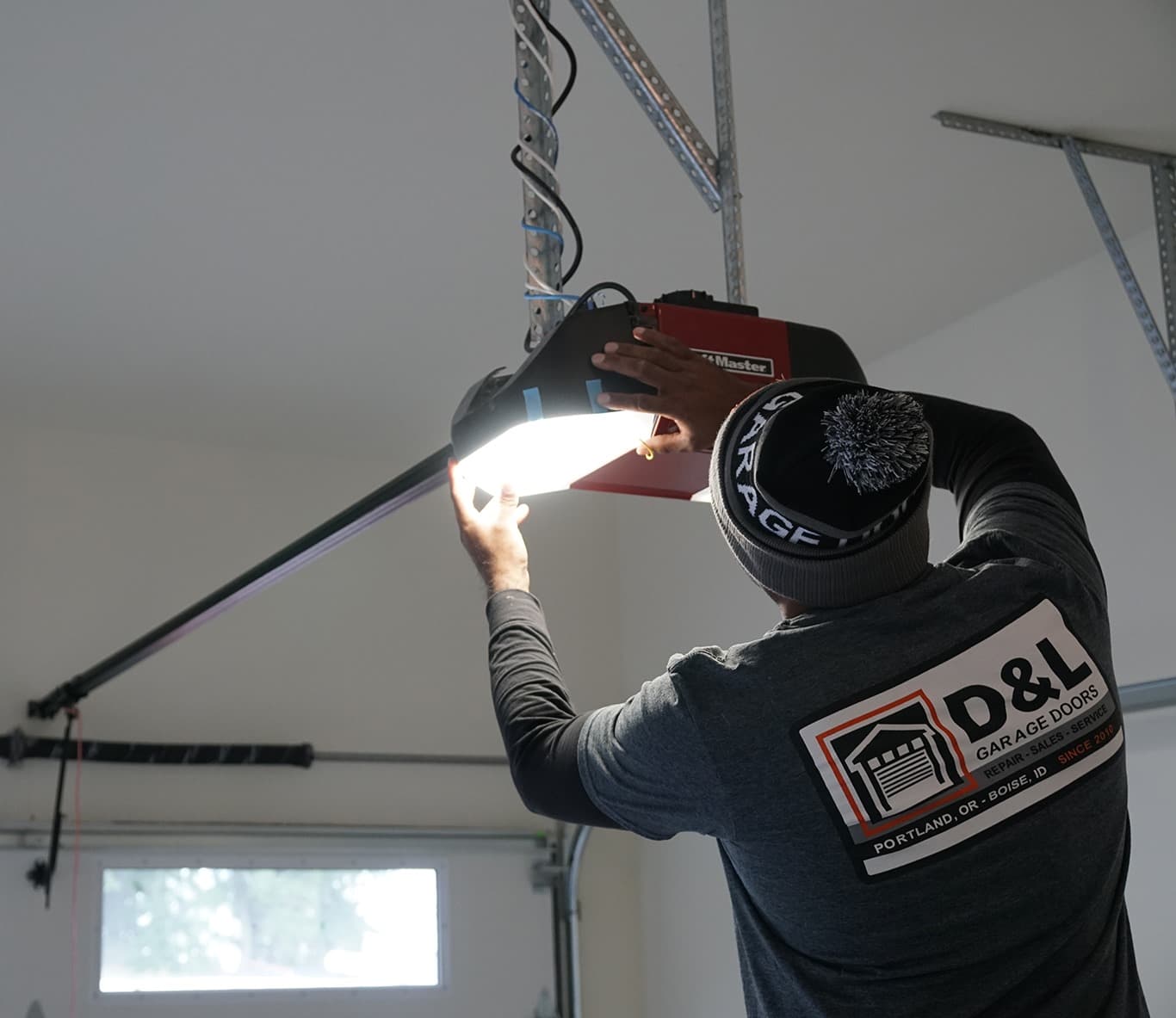
What the door is telling you
One symptom can have several causes. Stop operating the door if it is crooked, unsupported, off track, or moving unpredictably.
A spring, cable, roller, track, or balance problem may be preventing safe movement. Repeated opener use can add damage when the door itself is too heavy.
Cable tension, rollers, tracks, hinges, and panel condition all need to be checked before the door is moved or reset.
Photo-eye alignment, obstructions, travel settings, door resistance, and opener controls can each cause a reversal.
New sounds or uneven movement can point to worn rollers, loose hardware, track issues, spring strain, or opener problems.
What gets checked
The goal is to find the failed part, identify related wear, and avoid replacing components that are still serviceable.
Spring condition, door weight, shaft movement, cables, drums, and bearings are reviewed together.
Tracks, rollers, hinges, fasteners, brackets, and panel alignment are checked for damage or binding.
The motor, rail, trolley, sensors, wall control, remotes, travel, and reversal behavior are considered.
The technician looks for contact points, damaged sections, worn seals, access issues, and anything affecting travel.
The right path depends on safety, remaining service life, parts availability, and whether damage extends beyond one component.
Appropriate when the main components are sound and the diagnosed issue can be corrected without rebuilding the system.
Used when a spring, cable, roller, hinge, sensor, track section, opener part, or other component has failed or is no longer serviceable.
Worth comparing when damage is broad, parts are unavailable, or the existing system no longer fits the opening or household needs.
You should know what was found, what is optional, and what must be addressed for safe operation.
Share what changed, when it started, and whether the door is open, closed, crooked, or making a new sound.
The technician checks the door, hardware, counterbalance, opener, and safety controls to identify the cause.
D&L explains the recommended scope, relevant alternatives, pricing, and any parts or timing considerations.
Work begins only after approval. The repaired system is then operated and checked for the completed scope.
Pricing clarity
A stuck door could involve balance, a spring, a cable, a track, rollers, an opener, or more than one issue. These approved figures are planning guidance, not a diagnosis or flat quote.
For an on-site diagnosis, inspection, and reviewed repair options before repair work begins.
Starts at $89
For off-track assessment and standard reset where the technician confirms it is safe and practical.
Starting at $256
Quoted after door size, model, color, and panel availability are confirmed.
Inspection required
How the diagnostic fee works
An $89 diagnostic fee applies to most service visits and is additional to parts, labor, and tax. If D&L completes the approved repair or installation during the same visit, the fee is credited toward that work. After-hours or urgent-service surcharges may apply.
Planning-range note
Typical planning range only. Final pricing may vary depending on on-site conditions, exact hardware requirements, material costs, labor needs, taxes, or unforeseen complications discovered during inspection. Our technicians will conduct an on-site assessment to provide a precise, tailored quote before any work begins.
Parts and system fit
Springs, cables, rollers, hinges, tracks, panels, openers, and controls are not universal. Measurements, ratings, compatibility, and condition guide the parts decision.
Warranties vary by parts and service. Most parts and labor include a manufacturer's warranty plus our workmanship warranty. Exact coverage, duration, and any exclusions will be provided in writing on your invoice.
Spring type, door weight, cable and drum setup, and cycle option must work as one system.
Roller, hinge, track, bracket, and fastener choices depend on the existing door and how it travels.
The opener cannot compensate for a poorly balanced or binding door. Door operation is checked before opener conclusions are made.
Before you schedule
A few details help the team route the request without asking you to diagnose the door yourself.
Questions customers ask
These answers address common garage door repair decisions before service. The actual scope is confirmed after the system is reviewed.
A new grinding, popping, scraping, or jerking motion can indicate developing wear or binding. Stop using the door if it is crooked, unstable, off track, or moving unpredictably. Otherwise, limit unnecessary cycles and arrange an inspection before the problem expands.
The opener may be disconnected, a trolley or drive component may have failed, or the door may be too heavy because of a spring or hardware problem. Do not keep cycling the opener. The door and opener should be checked together.
Yes, when the diagnosis shows related issues and the required parts and approved scope are available. D&L reviews the findings and price before any additional work begins.
Replacement is worth comparing when damage affects several sections or systems, important parts are unavailable, the opening needs a different setup, or repeated repair costs no longer make practical sense. A repair may still be the better choice when the door and major hardware remain serviceable.
An $89 diagnostic fee applies to most service visits and is additional to parts, labor, and tax. If D&L completes the approved repair or installation during the same visit, the fee is credited toward that work. After-hours or urgent-service surcharges may apply.
Warranties vary by parts and service. Most parts and labor include a manufacturer's warranty plus our workmanship warranty. Exact coverage, duration, and any exclusions will be provided in writing on your invoice.
Use a narrower page when it better matches the garage door repair system, failed part, or project.
Use this path when a spring has broken or the door suddenly feels too heavy.
Read the detailsCompare opener faults with door and hardware problems.
Read the detailsRead the next steps for a door that has left its tracks or hangs unevenly.
Read the detailsPlan inspection, lubrication, balance, and safety checks for a working door.
Read the detailsRead practical garage door repair background before you decide what to ask or schedule.
Match common symptoms to a safe next step without dismantling the system.
Read the detailsKnow which observations are reasonable and which parts should not be touched.
Read the detailsUnderstand how track position affects smooth, supported travel.
Read the detailsUse a regional page for the confirmed local phone, scheduling route, office context, and garage door repair service-area information.
Choose the correct regional phone, scheduling path, and local page for garage door repair.
Read the detailsView D&L garage door repair, office, pricing, and scheduling information for the Boise area.
Read the detailsView D&L garage door repair, office, pricing, and scheduling information for Portland Metro.
Read the detailsUse D&L's published customer-feedback and service-process pages to verify what other customers shared and understand what happens before approved work.
Review feedback connected to D&L's Portland and Boise Google Business Profiles and open the matching profile to verify the source.
Read the detailsUnderstand how the team diagnoses the system, explains the practical options, and reviews the scope before approved work begins.
Read the detailsYou do not need to identify the failed part. Call, schedule online, or start the estimator, and D&L will help you choose the right repair starting point.

The company behind this page
We help homeowners, property managers and businesses plan garage door repairs, replacements and maintenance. Our service guides explain common symptoms, the inspection process and what to discuss with your local team.
Choose your local team
Share the service address, symptoms and equipment details. The team can review the next step and appointment options before you book.
(888) 641-5060Schedule service info@dlgaragedoors.comFor a correction or content question, email us with the page link. Online guidance does not replace an on-site inspection.
The showroom is at the back of the building near 67th Avenue and SE Foster Road. Enter the parking lot from 67th Avenue. Call ahead to confirm visit arrangements.
The showroom is near 38th Avenue and W Chinden Boulevard. Parking-lot access is from 38th Avenue. Call ahead to confirm visit arrangements.