
1
A loud bang from the garage
A torsion spring can release with a sharp sound when it breaks. A visible gap may appear in the coil above the door.
Broken spring and counterbalance service
Garage door springs counterbalance the weight of the door. When a spring breaks or loses the ability to support that weight, the door can become extremely heavy and the opener can be damaged by repeated use. D&L identifies the spring system, checks the related hardware, and sizes the replacement to the door before approved work begins.
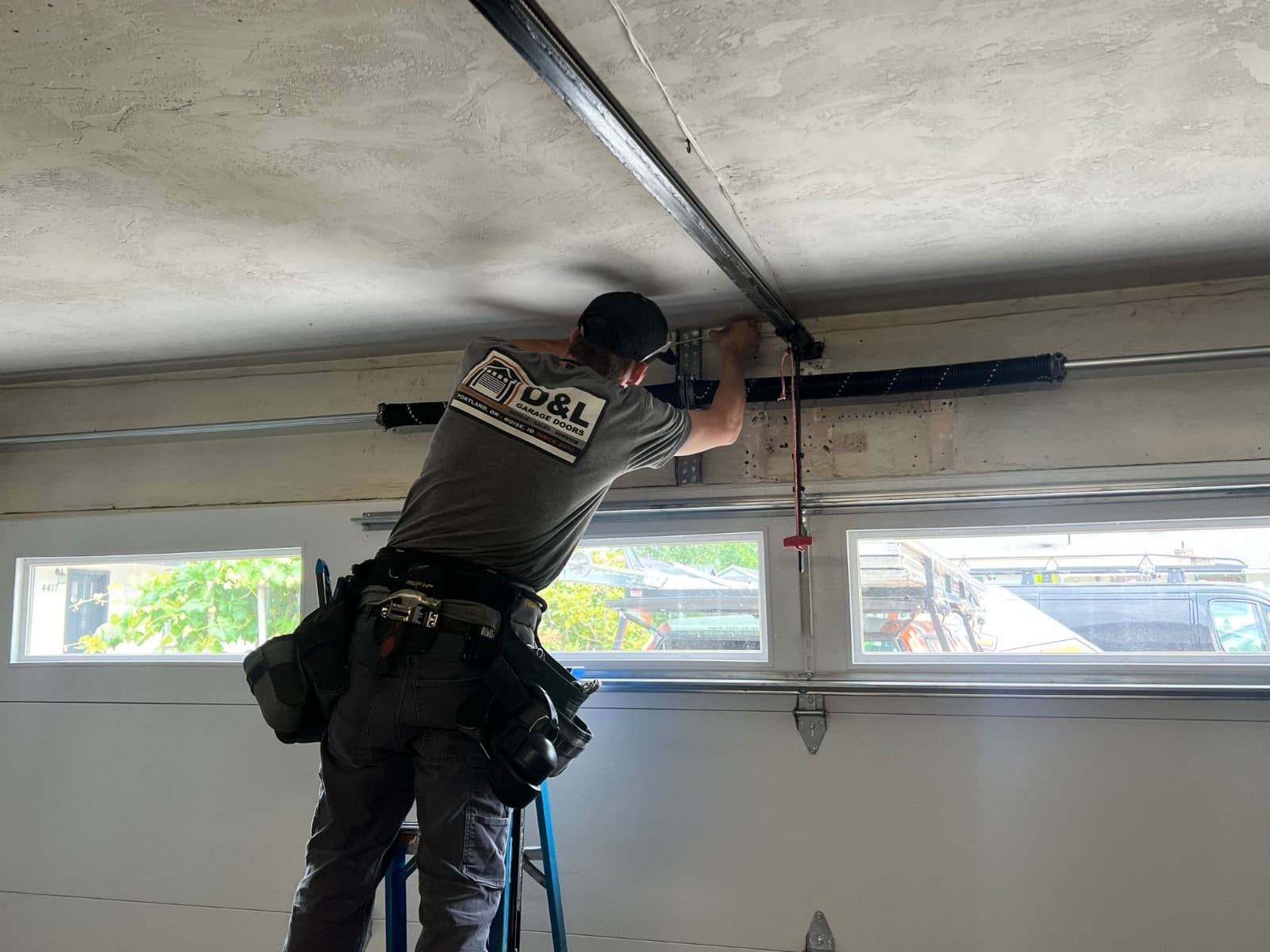
Broken spring signs
A broken spring is often obvious, but a weak or incorrectly matched spring can show up as poor balance, uneven movement, or opener strain.
A torsion spring can release with a sharp sound when it breaks. A visible gap may appear in the coil above the door.
Without proper counterbalance, the opener and anyone lifting manually may be taking the full door weight.
A spring, cable, drum, or balance issue can let one side move differently. Do not try to straighten or lift the door.
An opener is designed to move a balanced door, not replace the lifting work of a failed spring system.
Spring-system diagnosis
The technician confirms the system and checks whether another component contributed to the failure or was damaged when the spring broke.
Torsion, extension, one-spring, two-spring, and specialty arrangements require different parts and procedures.
Door size, construction, added insulation, windows, and previous modifications can affect the required spring specification.
Related lifting hardware is checked for wear, damage, alignment, and safe operation.
After the door can be balanced correctly, the opener and safety controls can be evaluated under normal load.
The practical option is the one that correctly counterbalances the door and fits the existing hardware, usage, and approved budget.
The spring specification is selected from the confirmed door and counterbalance requirements, not by appearance alone.
Cables, drums, bearings, or other parts are included only when inspection shows they are damaged, worn, or incompatible with the repair.
Where compatible and available, standard and higher-cycle options can be compared by expected use, written terms, and price.
A spring visit should leave the door balanced and the completed system checked under normal operation.
The team records whether the door is open or closed, which spring system is present, and whether the door is trapped or unstable.
The technician checks the door, spring arrangement, lifting hardware, and conditions that determine the replacement.
The recommended spring setup, any related repairs, pricing, and available cycle choices are explained for approval.
After approved work, the door balance, travel, opener load, and applicable safety functions are checked.
Pricing clarity
The same-looking door can require different spring specifications. This approved range is a planning reference after the setup is confirmed on site.
For an on-site diagnosis, inspection, and reviewed repair options before repair work begins.
Starts at $89
For common residential spring replacement after the technician confirms the spring setup on site.
$289-$699 typical planning range
How the diagnostic fee works
An $89 diagnostic fee applies to most service visits and is additional to parts, labor, and tax. If D&L completes the approved repair or installation during the same visit, the fee is credited toward that work. After-hours or urgent-service surcharges may apply.
Planning-range note
Typical planning range only. Final pricing may vary depending on on-site conditions, exact hardware requirements, material costs, labor needs, taxes, or unforeseen complications discovered during inspection. Our technicians will conduct an on-site assessment to provide a precise, tailored quote before any work begins.
Spring and hardware choices
A higher-cycle spring may be useful for a frequently operated door, but only when the size, hardware, space, and written terms fit the system.
Warranties vary by parts and service. Most parts and labor include a manufacturer's warranty plus our workmanship warranty. Exact coverage, duration, and any exclusions will be provided in writing on your invoice.
Mounted on a shaft above the opening, these systems use spring torque, drums, and cables to counterbalance the door.
Mounted alongside the horizontal tracks, these systems stretch as the door closes and require correctly installed safety cables.
Door use, weight, spring dimensions, hardware clearance, availability, and written coverage all matter when comparing options.
Before you schedule
Do not climb or touch the spring to gather information. A safe description or photo from a distance is enough.
Questions customers ask
These answers address common garage door spring replacement decisions before service. The actual scope is confirmed after the system is reviewed.
Do not force or repeatedly operate a door with a broken spring. The door may be extremely heavy, unstable, or uneven, and the opener can be damaged. Keep clear and arrange professional spring service.
Not necessarily. An opener may stop or strain because it is trying to move a door that is no longer counterbalanced. The opener should be checked after the spring system and door balance are restored.
Not every door has the same spring arrangement, so there is no universal answer. The technician checks the complete setup, age and condition, door requirements, and compatible options before recommending the approved scope.
A high-cycle spring is designed for a greater number of operating cycles than a standard option when it is correctly sized and compatible with the door. Availability, dimensions, expected use, price, and written terms should be compared before selection.
Common residential spring replacement has an approved typical planning range of $289-$699 after the spring setup is confirmed. Custom or high-cycle springs, oversized or commercial doors, related hardware, taxes, timing, and on-site conditions can change the final quote.
Warranties vary by parts and service. Most parts and labor include a manufacturer's warranty plus our workmanship warranty. Exact coverage, duration, and any exclusions will be provided in writing on your invoice.
Use a narrower page when it better matches the garage door spring replacement system, failed part, or project.
Review the full repair path when the spring failure may have affected other door components.
Read the detailsLearn about shaft-mounted torsion spring systems and their related hardware.
Read the detailsUnderstand extension spring layouts and the role of safety cables.
Read the detailsCompare higher-cycle options when the door and hardware can support them.
Read the detailsRead practical garage door spring replacement background before you decide what to ask or schedule.
Follow safe immediate steps while you arrange service.
Read the detailsSee how a torsion spring works with the shaft, drums, and cables.
Read the detailsUnderstand what a cycle rating means when comparing spring options.
Read the detailsUse a regional page for the confirmed local phone, scheduling route, office context, and garage door spring replacement service-area information.
Choose the correct regional phone, scheduling path, and local page for garage door spring replacement.
Read the detailsView D&L garage door spring replacement, office, pricing, and scheduling information for the Boise area.
Read the detailsView D&L garage door spring replacement, office, pricing, and scheduling information for Portland Metro.
Read the detailsTell D&L whether the door is open, closed, crooked, or trapping a vehicle. The team can help route the request and explain the next step.

The company behind this page
We help homeowners, property managers and businesses plan garage door repairs, replacements and maintenance. Our service guides explain common symptoms, the inspection process and what to discuss with your local team.
Choose your local team
Share the service address, symptoms and equipment details. The team can review the next step and appointment options before you book.
(888) 641-5060Schedule service info@dlgaragedoors.comFor a correction or content question, email us with the page link. Online guidance does not replace an on-site inspection.
The showroom is at the back of the building near 67th Avenue and SE Foster Road. Enter the parking lot from 67th Avenue. Call ahead to confirm visit arrangements.
The showroom is near 38th Avenue and W Chinden Boulevard. Parking-lot access is from 38th Avenue. Call ahead to confirm visit arrangements.