


Question-backed garage door guide
Torsion Spring: Definition, Signs, and Safety
A torsion spring is mounted on a shaft above many garage doors. It stores energy as the door closes and supplies counterbalance as the door opens, reducing the load on the opener and other hardware.
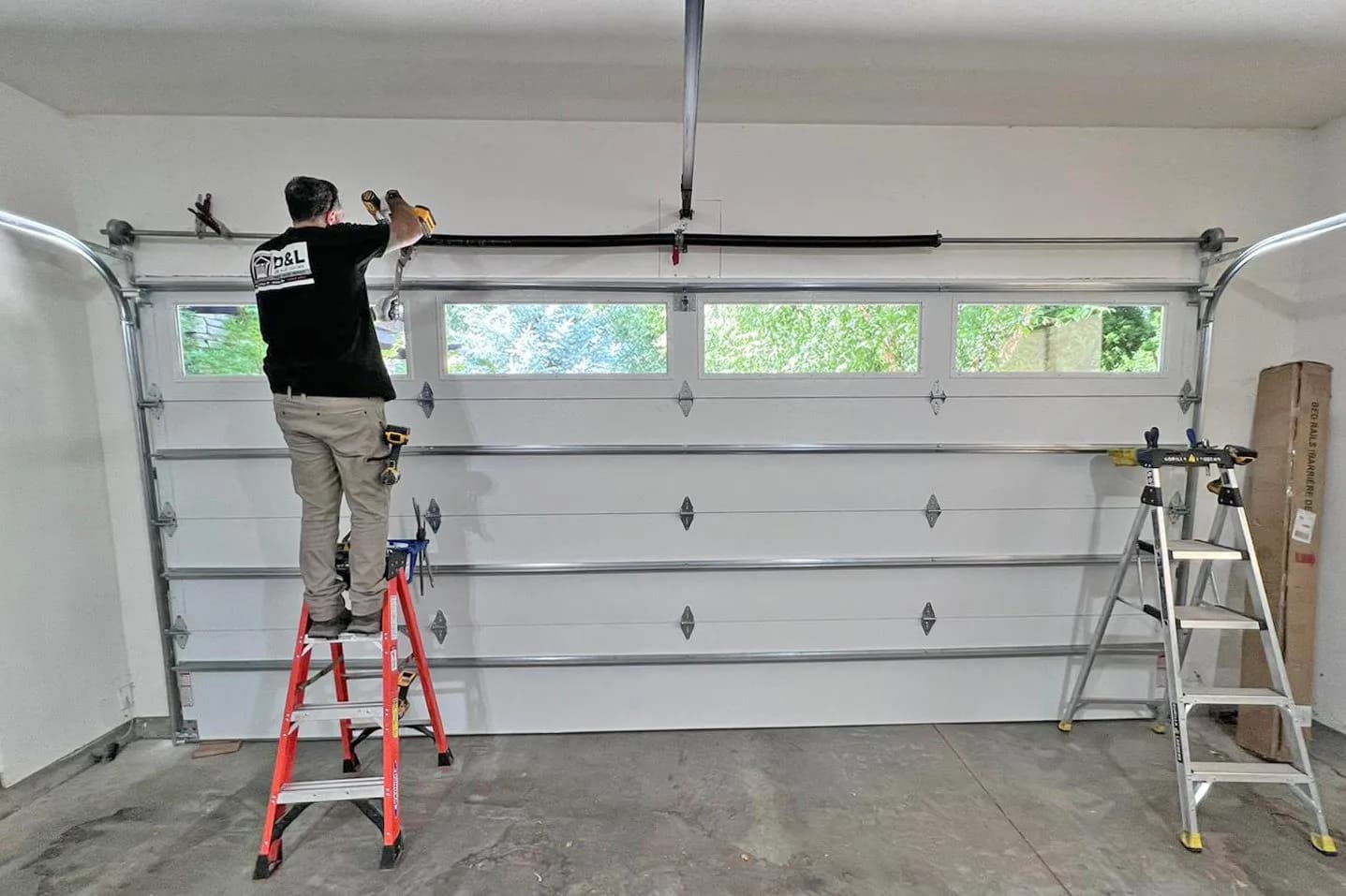
Location
Usually on a shaft above the door opening
Main job
Counterbalance the weight of the door
Service boundary
Adjustment and replacement are professional work
How to use this page
Get a useful answer without crossing the safety boundary
- Step 1
Understand the term
Start with the plain-language definition and why the component matters.
- Step 2
Compare safe observations
Use visible symptoms only; do not use the page as a repair procedure.
- Step 3
Choose the next step
Keep learning, document the condition, or request the matching service.
Keep this guide with your garage door records
Print it, save a text checklist, or email the page link. Worksheet entries remain local and are never included in the email link.
Plain-language explanation
What this garage door term means
Torsion springs are selected for a specific door weight and configuration. The spring, shaft, drums, cables, and bearings work as one lifting system.
A visible gap in the spring, a loud bang, a suddenly heavy door, or an opener that strains can indicate a spring-system problem.
What you can safely observe
- Keep the door stopped and look from a safe distance for a visible gap in the spring.
- Note whether the door is fully closed, partly open, or uneven.
- Write down what happened before the problem, including any bang or sudden change in movement.
Professional inspection
What a technician can evaluate
A clear description helps a technician prepare, but inspection is what confirms the cause and the appropriate next step.
Spring size and condition, shaft, bearings, drums, and cables
Door weight, balance, travel, and related hardware wear
Whether the opener or another component was affected
Do not turn this guide into a repair procedure
This page explains the component and safe observations only. Do not adjust, remove, force, or disassemble springs, cables, tracks, bottom brackets, or an unstable door.
Stop and request professional help when:
- A spring has a visible gap or appears separated.
- The door is suddenly heavy, crooked, or stuck.
- The opener strains or the cables appear loose.
- The door is partly open after a suspected spring failure.
Pricing, coverage, and product fit
Plan the next step with fewer surprises
A useful service request includes the condition you can see, the exact product information you can find, and the questions you want answered before approving work.
Plan for the quote
Published pricing ranges help with planning. Final pricing depends on diagnosis, parts, door setup, access, timing, service area, taxes, and the work you approve.
Review pricing guidanceCheck written warranty terms
Warranties vary by parts and service. Most parts and labor include a manufacturer's warranty plus our workmanship warranty. Exact coverage, duration, and exclusions are provided in writing on your invoice.
Read warranty informationIdentify the product correctly
Record the brand, model, serial number, and visible labels. Product fit and instructions depend on the exact system; a brand reference does not imply an endorsement or dealer relationship.
Find manufacturer information
Your observation worksheet
Record the details that make the next conversation easier
Fill this out for your own notes, then print or save the page. Nothing entered here is submitted to D&L or stored by this website.
Keep learning with the next useful page
Related professional service
Need a trained technician to inspect it?
Use the matching service page to understand the repair path, pricing factors, and ways to schedule.
Garage Door Spring ReplacementCommon questions
Answers that help you choose the next step
What is a garage door torsion spring?
It is a spring mounted on a shaft above the door that counterbalances the door's weight. It works with the shaft, drums, and cables so the door and opener do not carry the full load directly.
How can I tell if a torsion spring may be broken?
Common clues include a visible gap in the spring, a loud bang, a door that will not move normally, loose-looking cables, or an opener that strains. Stop operation and keep clear.
Can I adjust a torsion spring myself?
No. Torsion-spring adjustment and replacement involve stored energy and specialized sizing and tools. A trained garage door technician should inspect and service the system.
Can I use this definition to repair torsion spring myself?
Use it to understand the system, record visible symptoms, and choose a safe next step. It is not a substitute for model-specific instructions or professional inspection. Stop before any step involving springs, lifting cables, bottom brackets, tracks, an unstable door, or changes to force, travel, reversal, or other safety settings.
How should I plan for pricing, warranty coverage, and compatible parts for torsion spring?
Pricing depends on the diagnosis, parts, door setup, access, timing, service area, taxes, and the work you approve. Published ranges are planning guidance, not a quote. Warranties vary by parts and service. Most parts and labor include a manufacturer's warranty plus our workmanship warranty. Exact coverage, duration, and exclusions are provided in writing on the invoice. Record the manufacturer, model, and serial information so compatibility can be checked without assuming an endorsement or dealer relationship.
Reviewed for clarity and safety on .
Helpful support when you are ready
You do not have to diagnose the garage door alone
Tell us what the door is doing, what changed, and anything you recorded in the worksheet. We will help route you to the right service and explain the next step without asking you to take apart or diagnose the system yourself.