1
The door is stuck, crooked, or cannot secure the opening
Door, spring, cable, track, section, curtain, and operator conditions may all affect safe movement and closure.
Commercial doors, operators, and planned service
Commercial door service starts with the opening, door or gate system, operator, usage, access, safety conditions, and operational need. D&L reviews the facility and equipment, separates urgent stabilization from planned repair or replacement, and provides a scope and quote for approval.
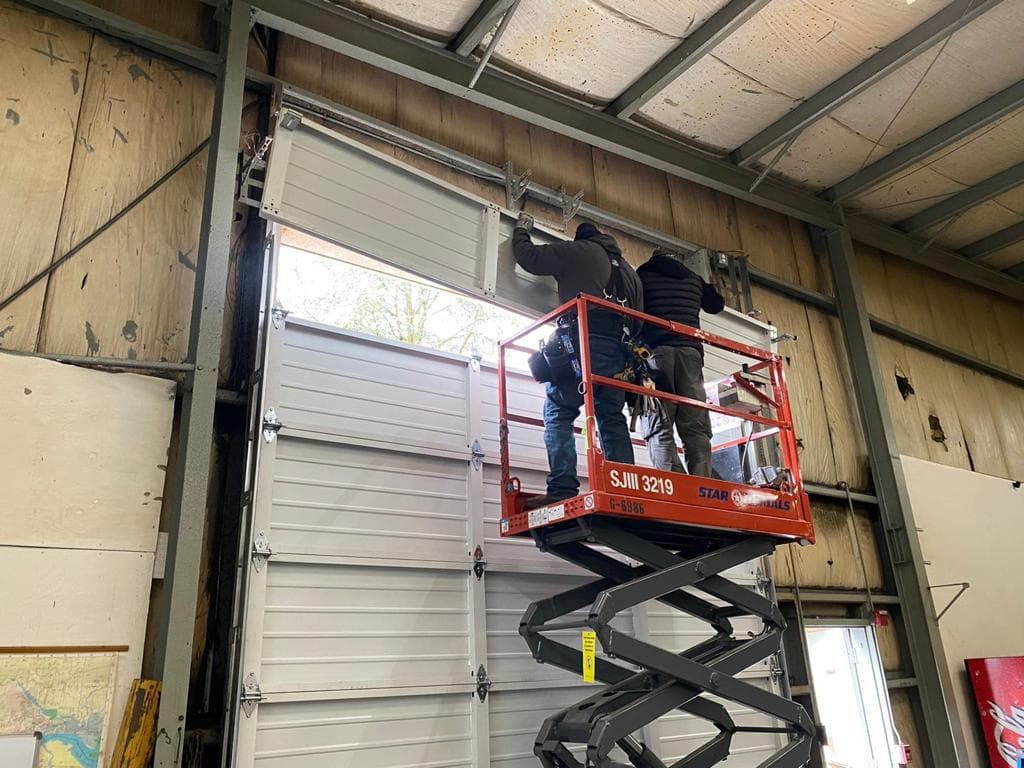
Operational warning signs
Keep people and equipment clear of an unstable door, damaged opening, failed operator, or compromised loading area.
Door, spring, cable, track, section, curtain, and operator conditions may all affect safe movement and closure.
Controls, limits, safety devices, power, drive components, door resistance, and operator fit need to be separated.
Usage, balance, rollers, hinges, guides, tracks, mounting, and maintenance history can change the repair path.
Traffic, opening size, clearance, insulation, access controls, workflow, and equipment can drive replacement or installation planning.
Commercial scope review
A useful commercial quote identifies the system, operating conditions, access, related equipment, and what the business needs restored or changed.
Door type, size, construction, sections or curtain, tracks or guides, seals, clearances, and visible damage are recorded.
Springs, shafts, cables, drums, rollers, hinges, bearings, brackets, and mounting are reviewed as applicable.
Operator type, controls, limits, drive, safety devices, access equipment, power conditions, and compatibility are considered.
Cycle demand, traffic, loading activity, work windows, equipment access, and site contacts help define the practical scope.
Commercial service may need an immediate safety step and a separate planned solution. D&L distinguishes those scopes in the review.
The first priority is controlling an unsafe or unsecured condition. Availability and the possible temporary scope must be confirmed for the specific site.
Appropriate when the door and operator remain supportable and worn or failed parts can be serviced within an approved maintenance or repair plan.
Worth evaluating when damage is broad, support is limited, usage has changed, or the existing door and operator no longer fit the opening and workflow.
System information and access planning help prevent an incomplete quote or a visit without the right service path.
Share the facility, opening, system behavior, safety condition, operational impact, and on-site contact.
D&L reviews the door, operator, controls, hardware, access, and conditions needed to define the scope.
Repair, replacement, parts, access requirements, work window, exclusions, pricing, and timing are reviewed for approval.
The serviced system is operated and checked for the completed scope, with written terms provided for the job.
Pricing clarity
A warehouse sectional door, commercial operator, loading-area component, and specialty opening do not share one useful flat price. D&L confirms the equipment and conditions before quoting the approved scope.
Quote note
Commercial, specialty, after-hours, and access-dependent work may use different service and dispatch terms. D&L confirms the applicable fees and quote process for the facility before work is approved.
Commercial service paths
A narrower service path can help the team understand the system before scheduling and quoting.
Warranties vary by parts and service. Most parts and labor include a manufacturer's warranty plus our workmanship warranty. Exact coverage, duration, and any exclusions will be provided in writing on your invoice.
Sectional and other commercial door systems require parts and repair decisions matched to the opening and usage.
Operator type, power, controls, safety devices, cycle requirements, and door compatibility guide repair or replacement.
Dock and loading-area requests need equipment identification, site access, operational context, and a defined inspection scope.
Before you schedule
Share what is safely available. Do not enter a restricted or unstable area to find a model number.
Questions customers ask
These answers address common commercial garage door decisions before service. The actual scope is confirmed after the system is reviewed.
D&L publishes service paths for commercial garage doors, commercial operators, loading dock equipment, fire-rated doors, safety inspections, and related systems. The team confirms whether the specific equipment, site, and requested scope fit the active regional service before scheduling.
Scheduling depends on the current calendar, location, access, parts, equipment, and requested work window. Share operating constraints and site requirements early so D&L can confirm a practical service plan. A specific response or completion time is not guaranteed.
The decision depends on safety, damage extent, equipment support, parts availability, usage, opening requirements, operator compatibility, and the approved total scope. A focused repair may be practical when the main system remains serviceable; replacement is worth comparing when those conditions no longer hold.
Provide the site address, contact, access process, equipment description, operational impact, work-window needs, and safe photos or model information when available. D&L will confirm any additional inspection or access requirements.
Commercial work is quoted after the door, operator, controls, hardware, opening, access, parts, work window, travel, taxes, and requested scope are reviewed. Commercial, specialty, after-hours, and access-dependent work may use different service or dispatch terms.
Warranties vary by parts and service. Most parts and labor include a manufacturer's warranty plus our workmanship warranty. Exact coverage, duration, and any exclusions will be provided in writing on your invoice.
Use a narrower page when it better matches the commercial garage door system, failed part, or project.
Use the operator path for motor, control, drive, and replacement planning.
Read the detailsRoute loading-area equipment questions through a more specific service page.
Read the detailsPlan a focused review of the published commercial door safety-inspection scope.
Read the detailsReview opening and framing considerations for door installation or replacement.
Read the detailsRead practical commercial garage door background before you decide what to ask or schedule.
Review basic precautions for damaged or unstable overhead door systems.
Read the detailsUnderstand the role of inspection and planned care before building a facility schedule.
Read the detailsIdentify common door, operator, control, and hardware terms used during service planning.
Read the detailsUse a regional page for the confirmed local phone, scheduling route, office context, and commercial garage door service-area information.
Choose the correct regional phone, scheduling path, and local page for commercial garage door.
Read the detailsView D&L commercial garage door, office, pricing, and scheduling information for the Boise area.
Read the detailsView D&L commercial garage door, office, pricing, and scheduling information for Portland Metro.
Read the detailsUse D&L's published customer-feedback and service-process pages to verify what other customers shared and understand what happens before approved work.
Review feedback connected to D&L's Portland and Boise Google Business Profiles and open the matching profile to verify the source.
Read the detailsUnderstand how equipment, access, operational needs, options, and approved work are discussed before the commercial scope moves forward.
Read the detailsCall or schedule with the site address, equipment description, access details, and what the door is preventing. D&L will confirm the next commercial service step.

The company behind this page
We help homeowners, property managers and businesses plan garage door repairs, replacements and maintenance. Our service guides explain common symptoms, the inspection process and what to discuss with your local team.
Choose your local team
Share the service address, symptoms and equipment details. The team can review the next step and appointment options before you book.
(888) 641-5060Schedule service info@dlgaragedoors.comFor a correction or content question, email us with the page link. Online guidance does not replace an on-site inspection.
The showroom is at the back of the building near 67th Avenue and SE Foster Road. Enter the parking lot from 67th Avenue. Call ahead to confirm visit arrangements.
The showroom is near 38th Avenue and W Chinden Boulevard. Parking-lot access is from 38th Avenue. Call ahead to confirm visit arrangements.