

Portland Rainy Season Garage Door Maintenance
Prepare your Portland garage door for wet weather with safe inspection steps, maintenance cues, and D&L service links for local help.
Dispatch reviews location, access, timing, and service details before appointment information is confirmed.
Quick decision support
Read the direct answer first, compare the symptoms or planning notes, then use the service and local links when you need D&L to review the next step.
- 6 min with answer-first sections
- Regional context for Oregon, Washington readers
- Safety boundaries before repair or installation decisions
- Crawlable links to related D&L services and resources
(503) 704-2654
OR CCB# 194109
This guide is maintained by the D&L Garage Doors team to explain common symptoms, service planning, safety boundaries, and when to request technician support in the Oregon area.
Portland rainy-season garage door maintenance starts with simple observations: listen for new sounds, watch how the door moves, check weather seals, and keep water away from hardware where possible. If the door feels heavy, binds, or looks uneven, stop using it and ask for service guidance before the problem grows.
This article was rewritten from owned Portland legacy blog topics about winterizing garage doors and rainy-season maintenance. It keeps the useful homeowner planning angle while removing dated promotion, broad promises, and unsupported claims. The goal is a practical Portland-area guide that helps a homeowner understand what to look for before requesting help from D&L Garage Doors.
Quick answer
In Portland weather, the main garage door risks are moisture around seals and hardware, opener strain from a door that does not move smoothly, and small alignment issues that become more noticeable during wet months. A short monthly check can catch changes early: look at the bottom seal, listen during a full open-close cycle, and note whether the door slows, shakes, or reverses unexpectedly.
What to check first
- Look for water pooling at the bottom seal or along the track area after heavy rain.
- Listen for scraping, popping, grinding, or a new squeal during a full door cycle.
- Watch whether the door stays level as it opens and closes.
- Check whether the opener strains, hums, or stops before the door is fully open.
- Keep boxes, bikes, and stored items away from tracks, sensors, and the door opening.
Why Portland rain changes garage door behavior
Moisture does not usually create a single obvious failure on its own. It often exposes small problems that were already developing: tired rollers, worn hinges, a bottom seal that no longer sits evenly, or tracks that have collected debris. When water reaches those areas, the door can sound louder, move less smoothly, or make the opener work harder than it should.
The best rainy-season habit is to look for changes rather than guessing at the part. If the door used to move quietly and now shudders after a week of wet weather, write down when it happens. Does it happen at the first movement, near the floor, at the top of travel, or only when the opener is used? That timing helps narrow the next step.
Maintenance tasks homeowners can usually keep simple
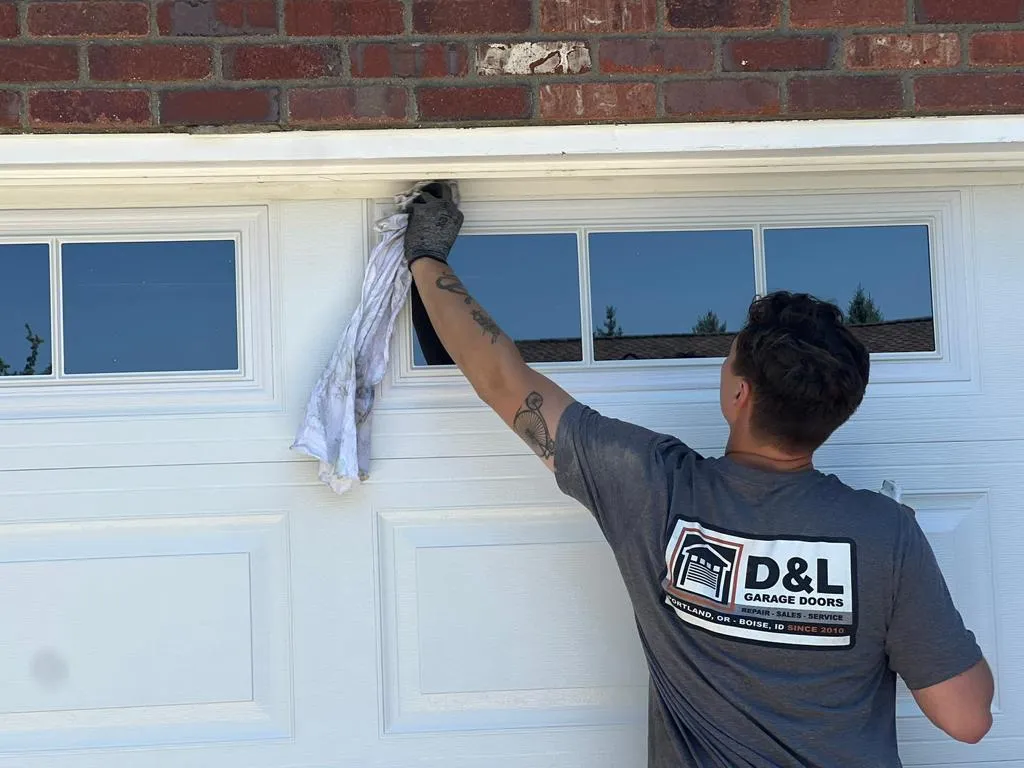
Most homeowner maintenance should stay visual and low-risk. Keep the area around the tracks clear, wipe obvious debris away without placing fingers near moving parts, and make sure the photo-eye sensors have a clear line of sight. If a seal is torn or hanging loose, do not force it back into place while the door is moving. Treat it as a service note, especially if the door is also rubbing or reversing.
Lubrication can help certain moving parts, but it is not a cure for a door that is out of balance or binding. If fresh lubrication does not change the sound or the door still looks uneven, the problem is probably not just dryness. That is where a technician should inspect the door, opener, spring system, rollers, hinges, and tracks together.
How to decide whether this is repair or maintenance
A maintenance visit is usually appropriate when the door still operates normally but sounds rough, needs a tune-up, or has small weather-related wear. Repair is more likely when the door will not open, will not close, reverses repeatedly, has a visible damaged part, or no longer feels safe to use. A wet-season issue can start as maintenance and turn into repair when a part has already worn past adjustment.
When you are not sure which bucket fits, describe the symptom instead of trying to diagnose it. “The door reverses near the floor after rainy nights” is more helpful than guessing that the sensor is bad. “The opener hums but the door does not lift” points to a different conversation than “the remote range is shorter after changing a bulb.”
When to stop using the door
Some garage door problems are inconvenient, and some are safety concerns. Stop using the door and request help when any of these signs are present:
- The door is crooked or one side rises faster than the other.
- A cable is loose, frayed, hanging, or wrapped oddly near the drum.
- A spring appears separated or the door suddenly feels much heavier.
- The opener runs but the door does not move normally.
If a door feels unusually heavy, looks crooked, pulls to one side, or makes a new sharp sound, the safest next step is to stop forcing it. A garage door can look simple from the driveway, but springs, cables, rollers, tracks, and opener arms all work together under load. A small symptom can become a larger repair when the door is repeatedly cycled while something is already out of alignment.
What to tell D&L before scheduling
Clear details help dispatch understand the request and help the technician prepare for the visit. Before you call or use the estimator, write down:
- Your Portland-area city or neighborhood and the best callback number.
- Whether the door is stuck open, stuck closed, reversing, noisy, or still operating.
- Whether the issue began after rain, wind, a power interruption, or a recent repair.
- Door size, number of doors, opener brand if visible, and whether the door has windows or insulation.
Photos can also help when they show the full door, the opener, the inside tracks, and any damaged part from a safe distance. Do not loosen springs, remove bottom fixtures, pull cables by hand, or put tools into the track while the door is under tension.
Related D&L resources
- Portland garage door service page - local contact and service context for Portland-area requests
- garage door repair service details - repair symptoms, safety boundaries, and next-step guidance
- garage door spring replacement guidance - spring and balance issues that should not be handled as DIY repair
- opener repair and installation help - remote, keypad, sensor, motor, and smart opener support
- garage door pricing context - approved planning language and factors that can change a quote
- online garage door estimator - a structured way to organize project details before scheduling
These links keep the next step specific. Use the city page for local contact context, the service pages for issue-specific guidance, the pricing page for approved planning language, and the estimator when you want to organize details before speaking with dispatch.
Bottom line
Rainy-season garage door care is about catching changes early and avoiding forced operation. Use the maintenance page when the door mostly works, the repair page when the door is stuck or unsafe, and the Portland location page when you need local scheduling context.
Serving Portland Metro
Garage door service information for Portland, Beaverton, Hillsboro and nearby communities
Local service information
Local factors to consider
Topics covered
Frequently asked questions
How often should Portland homeowners check a garage door during rainy season?
A monthly visual and sound check is a safe rhythm for many homes, especially after storms. Look for water near seals, new sounds, uneven movement, and opener strain.
Can rain make a garage door opener work harder?
Rain does not directly make an opener stronger or weaker, but moisture can expose binding, seal drag, worn rollers, or balance issues that make the opener carry extra strain.
Should I force a garage door if it sticks after wet weather?
No. If the door sticks, reverses, or looks uneven, stop using it and request service guidance. Forcing the door can worsen track, cable, opener, or spring problems.
Need help with a garage door issue?
Schedule your garage door service request
Regional credential reference • Safety-first service planning
OR CCB# 194109 • Serving Oregon and surrounding areas
Related garage door guides
Continue with source-safe D&L guides that help readers compare issues, plan service, and choose a practical next step.


Need help choosing the right garage door service step?
Use the estimator for planning or contact D&L so dispatch can review location, issue, timing, access, and appointment details before approved work begins.