


Question-backed garage door guide
Garage Door Safety Cables: Purpose and Warning Signs
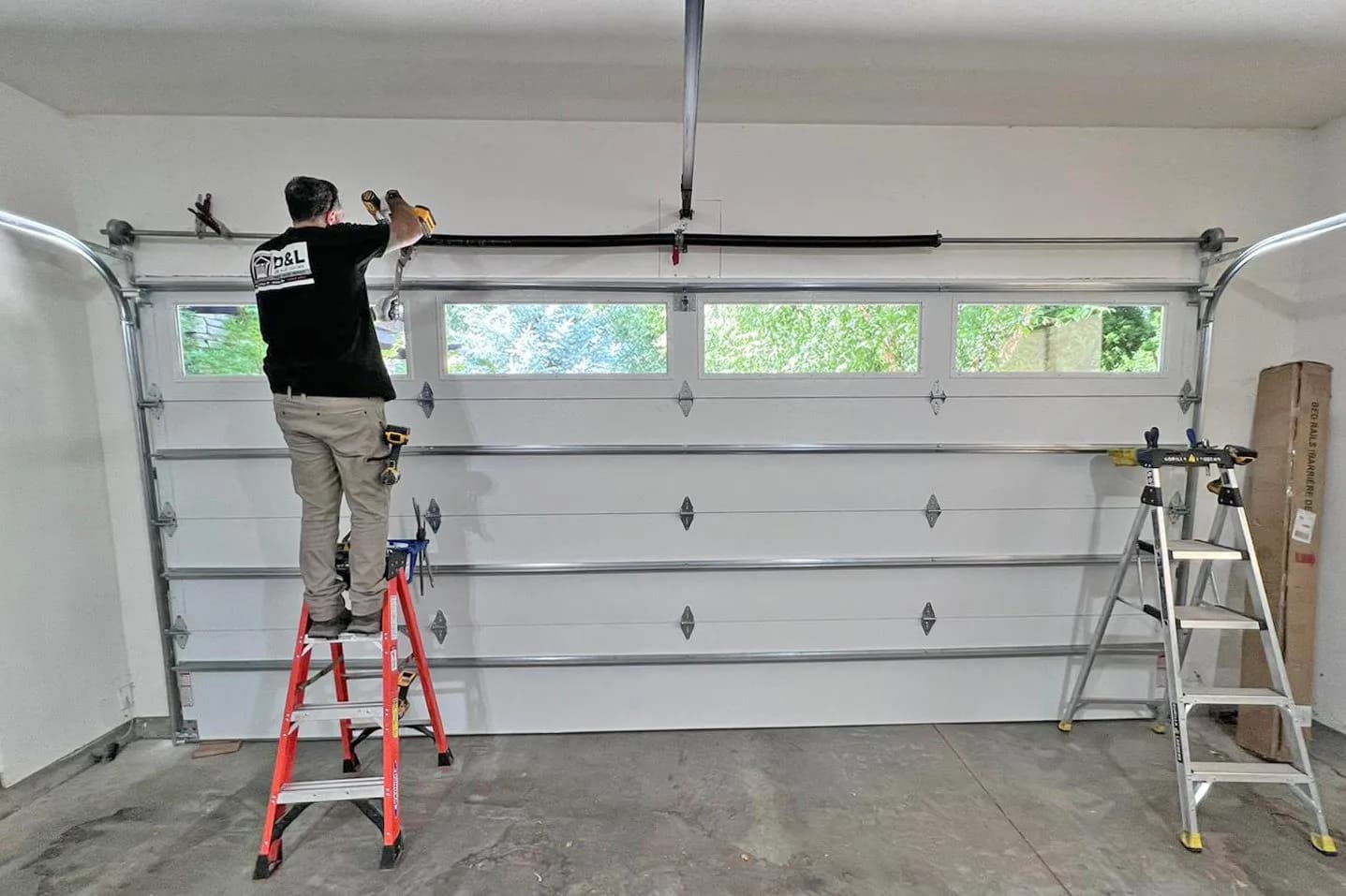
A garage door safety cable runs through an extension spring to help contain spring pieces if the spring breaks. It does not lift the door and does not prevent spring failure.
Used with
Garage door extension-spring systems
Main job
Help contain a spring if it breaks
Safety boundary
Do not touch springs, cables, anchors, or pulleys
How to use this page
Recognize an extension-spring safety cable without approaching tensioned hardware
- Step 1
Understand the term
Start with the plain-language definition and why the component matters.
- Step 2
Compare safe observations
Use visible symptoms only; do not use the page as a repair procedure.
- Step 3
Choose the next step
Keep learning, document the condition, or request the matching service.
Keep this guide with your garage door records
Print it, save a text checklist, or email the page link. Worksheet entries remain local and are never included in the email link.
Plain-language explanation
What a safety cable does in an extension-spring system
Extension springs stretch along the horizontal track area on some doors. A separate safety cable passes through each spring and anchors independently so a broken spring is less likely to travel across the garage.
The lift cable and safety cable have different jobs. A loose, missing, frayed, or incorrectly routed cable requires inspection of the complete extension-spring system, including anchors, pulleys, springs, and related hardware.
What you can document from a safe distance
- From outside the spring path, note whether a separate cable appears to pass through each extension spring.
- Record any visible loose end, fraying, damaged anchor, hanging spring, or displaced pulley without approaching it.
- Note the door position and keep people, vehicles, and stored items away from the affected side.
Professional inspection
What a spring-system inspection needs to confirm
A clear description helps a technician prepare, but inspection is what confirms the cause and the appropriate next step.
Both extension springs, safety cables, lift cables, pulleys, anchors, and attachment points
Door weight, balance, track condition, and hardware affected by a spring problem
Correct component compatibility and the written scope for spring-system service
Do not turn this guide into a repair procedure
This page explains the component and safe observations only. Do not adjust, remove, force, or disassemble springs, cables, tracks, bottom brackets, or an unstable door.
Stop and request professional help when:
- A safety cable appears missing, loose, frayed, detached, or routed outside the extension spring.
- An extension spring is hanging, separated, stretched unevenly, or visibly damaged.
- The door is crooked, partly open, heavy, or affected by a loose lift cable.
Pricing, coverage, and product fit
Plan the next step with fewer surprises
A useful service request includes the condition you can see, the exact product information you can find, and the questions you want answered before approving work.
Plan for the quote
Published pricing ranges help with planning. Final pricing depends on diagnosis, parts, door setup, access, timing, service area, taxes, and the work you approve.
Review pricing guidanceCheck written warranty terms
Warranties vary by parts and service. Most parts and labor include a manufacturer's warranty plus our workmanship warranty. Exact coverage, duration, and exclusions are provided in writing on your invoice.
Read warranty informationIdentify the product correctly
Record the brand, model, serial number, and visible labels. Product fit and instructions depend on the exact system; a brand reference does not imply an endorsement or dealer relationship.
Find manufacturer information
Your observation worksheet
Record the details that make the next conversation easier
Fill this out for your own notes, then print or save the page. Nothing entered here is submitted to D&L or stored by this website.
Understand extension springs, safety cables, and spring failure
Related professional service
Is a spring or cable missing, loose, or damaged?
Use the matching service page to understand the repair path, pricing factors, and ways to schedule.
Garage Door Spring ReplacementCommon questions
Safety cable questions for extension-spring doors
What is a garage door safety cable?
It is a containment cable that passes through an extension spring and anchors separately. Its job is to help restrain spring pieces if the spring breaks.
Is a safety cable the same as the garage door lift cable?
No. The lift cable helps move the door through the counterbalance system. The safety cable is a separate containment component used with extension springs.
What should I do if a safety cable looks missing or loose?
Stop using the door, keep clear of the spring and cable path, and request a complete extension-spring inspection. Do not attempt to route, tighten, or anchor the cable yourself.
Can I use this definition to repair safety cable myself?
Use it to understand the system, record visible symptoms, and choose a safe next step. It is not a substitute for model-specific instructions or professional inspection. Stop before any step involving springs, lifting cables, bottom brackets, tracks, an unstable door, or changes to force, travel, reversal, or other safety settings.
How should I plan for pricing, warranty coverage, and compatible parts for safety cable?
Pricing depends on the diagnosis, parts, door setup, access, timing, service area, taxes, and the work you approve. Published ranges are planning guidance, not a quote. Warranties vary by parts and service. Most parts and labor include a manufacturer's warranty plus our workmanship warranty. Exact coverage, duration, and exclusions are provided in writing on the invoice. Record the manufacturer, model, and serial information so compatibility can be checked without assuming an endorsement or dealer relationship.
Reviewed for clarity and safety on .
Helpful support when you are ready
You do not have to diagnose the garage door alone
Tell us what the door is doing, what changed, and anything you recorded in the worksheet. We will help route you to the right service and explain the next step without asking you to take apart or diagnose the system yourself.